
Cities that care
at National Institute of Design, Bangalore
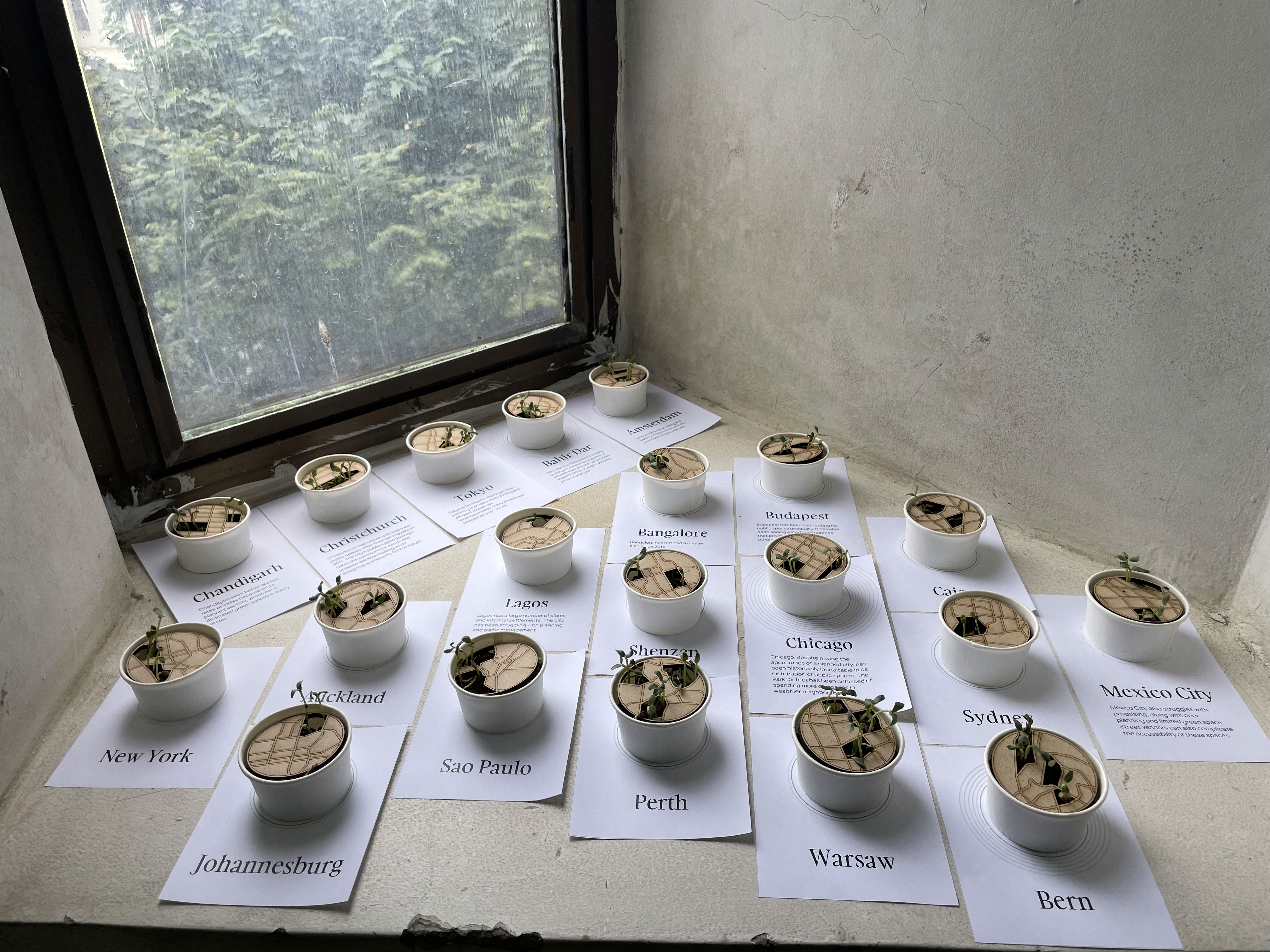
Figures to Forms was a display of data physicalisation work at NID Bangalore. I presented my work as part of our coursework under the same name, which Rasagy Sharma conducts every year.
My display, titled 'Cities that care', tried to shed some light on the share of public spaces in cities around the world. To me, this was an exercise in metaphor mapping and material knowledge. I played with micro-greens and fabric from old Dunzo bags to bring this issue to life.
My role
Information designer
Timeline
August 2024

The UN’s Sustainable Development Goals track every country’s effort in tackling large scale problems like climate change, poverty, inequality and, of course, sustainable development. One of those goals looks at how cities around the world are trying to become safer, more inclusive and equitable.
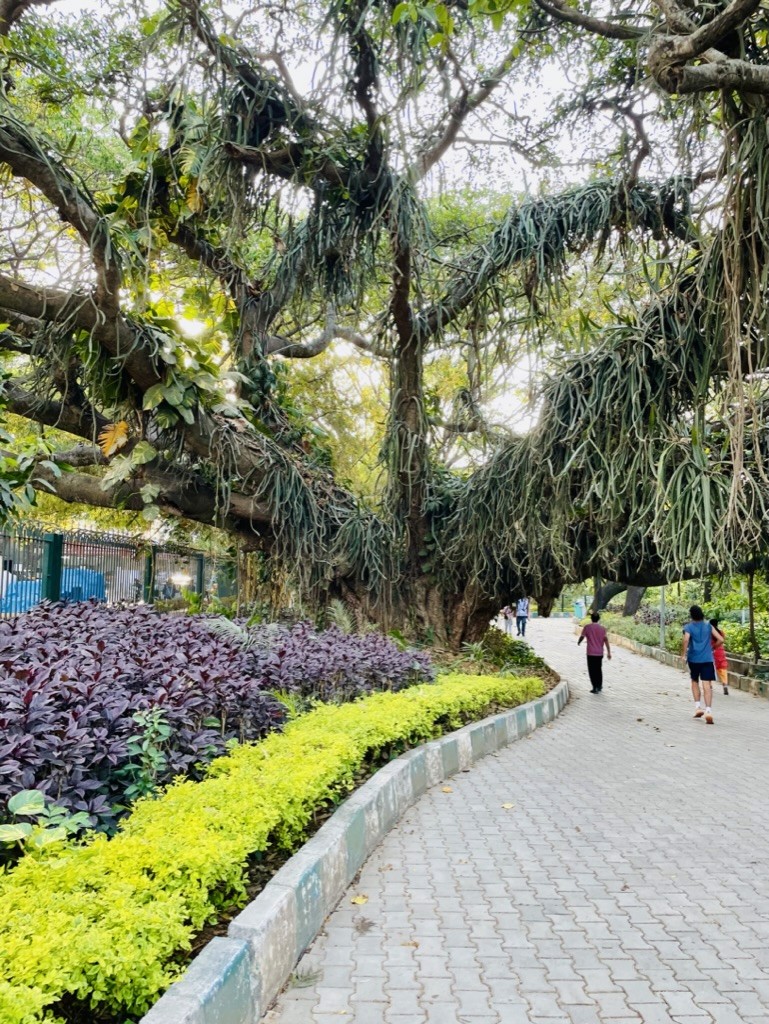
As more people around the world shift to cities, it’s all the more important that our spaces remain humane. Public spaces (like parks, playgrounds, pedestrian-friendly streets, waterfronts, boulevards, bicycle paths) are indicators of social health. The amount of land a city dedicates to public spaces can directly reflect in its productivity, civic sense and quality of life. Public spaces are not just for leisure, but also health.
🫘 Sifting data
A quick analysis in Observable would reveal something startling :
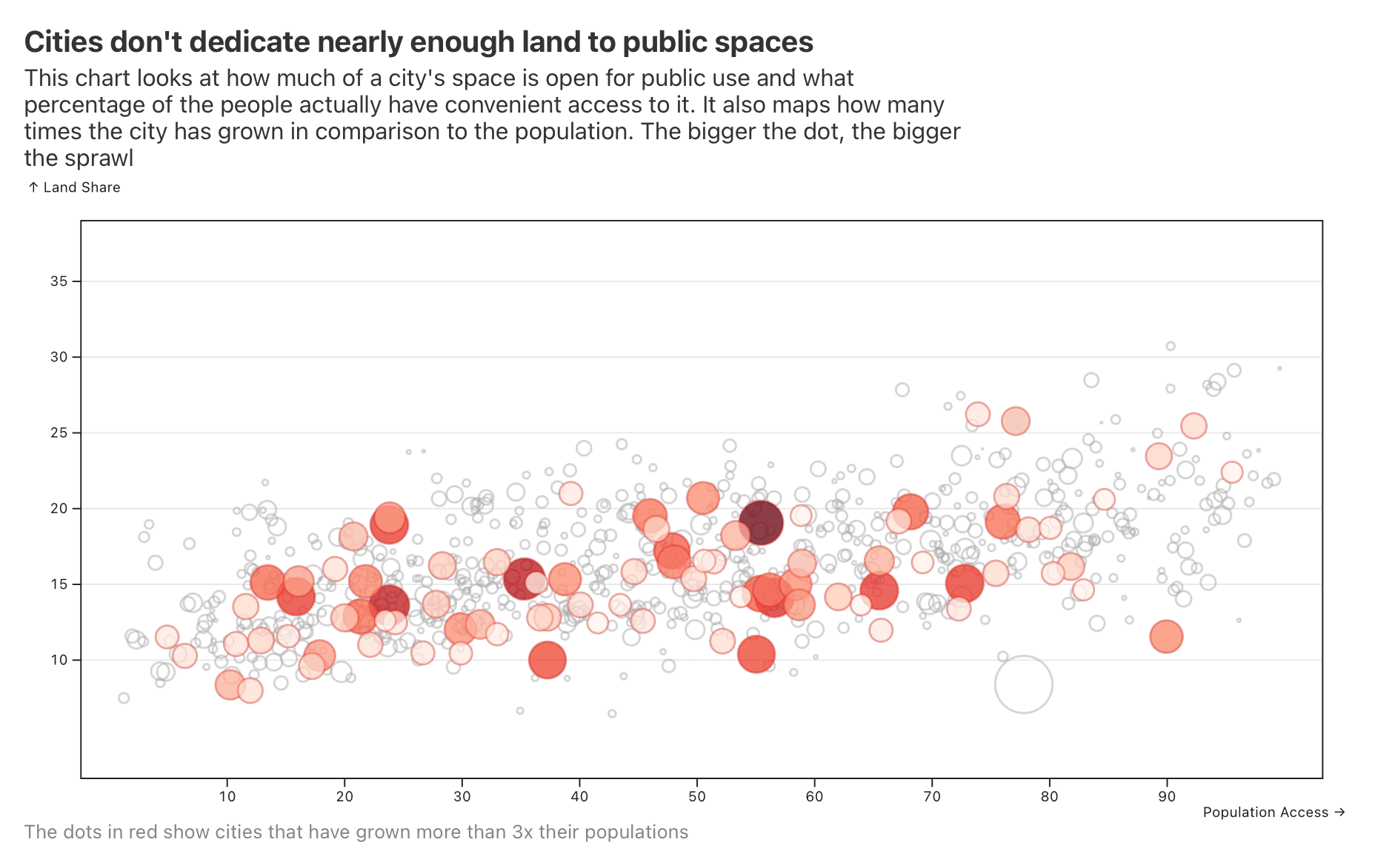
💡 Most cities don't dedicate more than 20% of their land share to public spaces
Less than 20%? Worldwide? That’s troubling because it falls below the 40-50% suggested by the UN. But it can be explained. Design for public spaces also depends on the geography, culture and population/development constraints too.
The same goes for sprawl, which is seen here in the size of the circle. It wouldn’t make much sense to visualise sprawl because the ratio here is affected by people moving in/out of the city. Bigger circles don’t necessarily mean bigger cities. It could just mean changing population counts too.
I decided to pick 20 cities around the world and showcase their land and access levels when it comes to public spaces. I picked a mix of popular, fastest growing and best/worst in terms of accessibility. Next, I needed a good metaphor for public spaces and cities.
🌱 Where the grass is green
If you think about it, public spaces are the parts of a city most conducive for growth. They foster the fruitful interactions and vibrant communities. They can be a fertile bed for growth, care and prosperity.
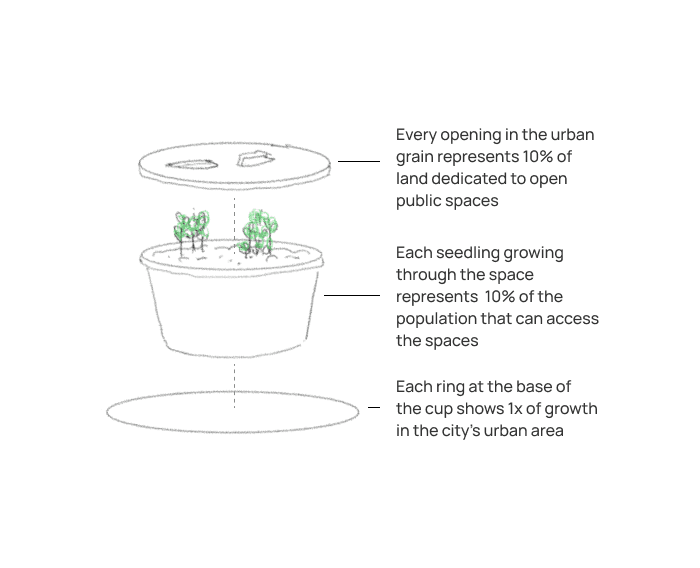
I took that a step further in imagining each city as a soil bed in a cup. Quick sketches helped break down the pieces that would make the installation.
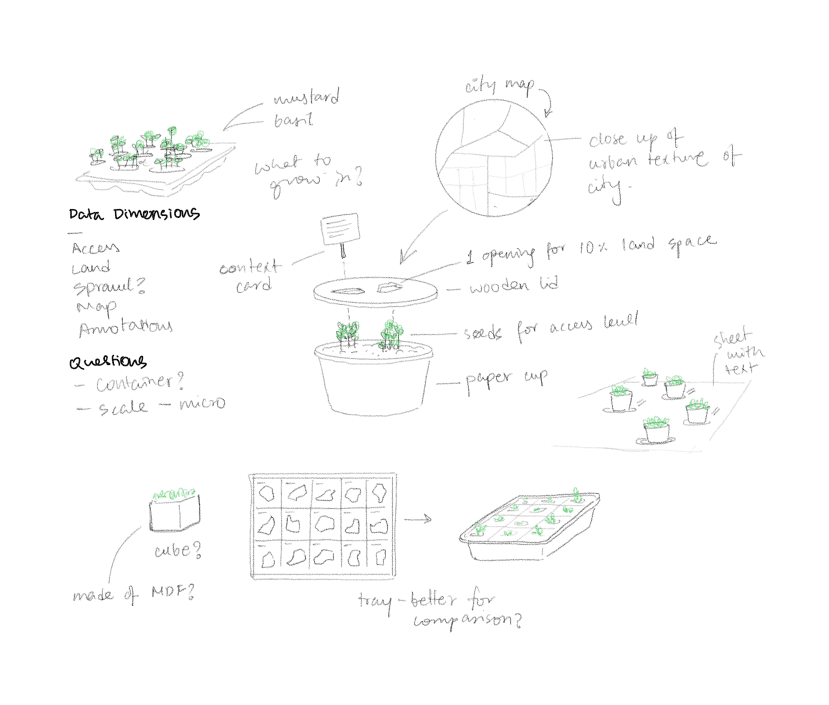
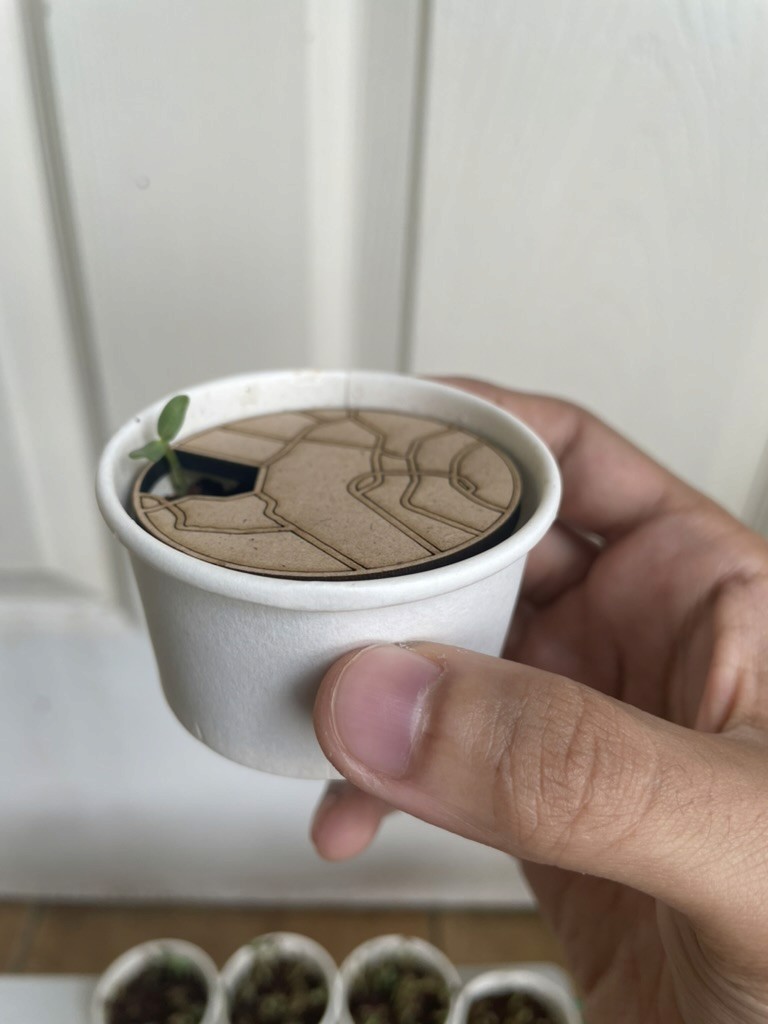
I thought of engraving the urban texture, or the road network, of every city onto a wooden lid. Every opening in the lid would represent 10% of its land dedicated to public spaces. Every seedling passing through the opening would represent 10% of the population that can access the spaces. So the more green you’d see, the better the rates of access would be in the city. 🌱 The first draft of this display featured sprawl, which would appear as rings at the base of the cup, as a complementary data point. This was later removed because it added to the confusion rather than clarity.
🪴 Grow your own data
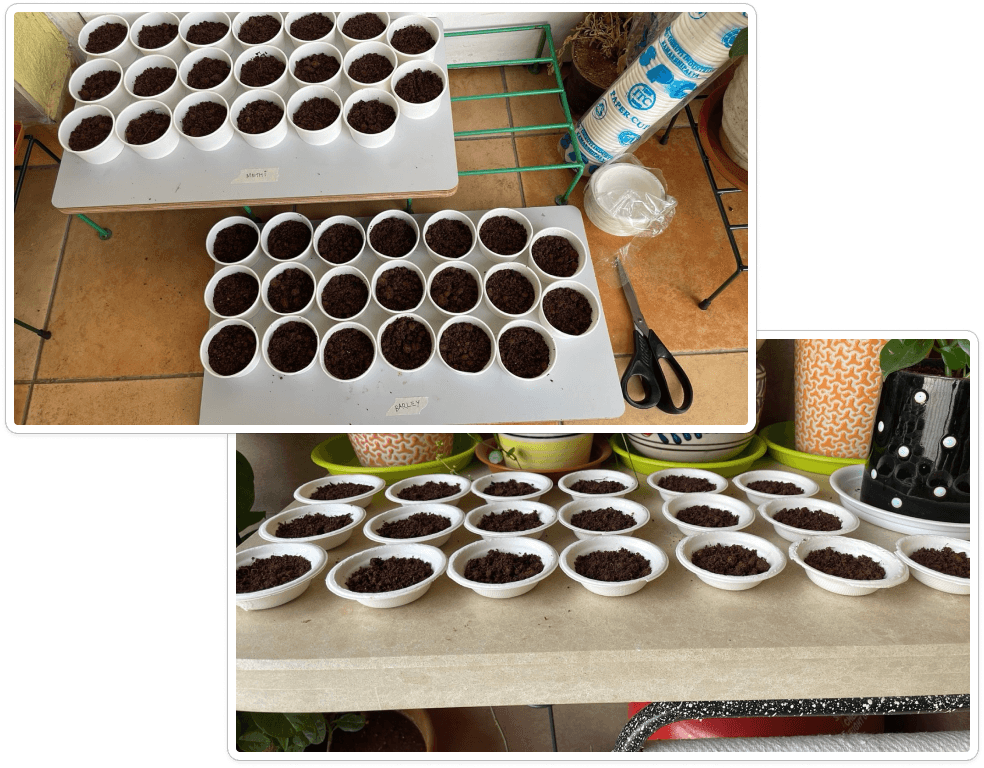
The plan was ambitious, at the least. Mostly because I’d never grown micro-greens within a week before, despite having a fairly green thumb. They were, of course, the most practical choice for this installation, but I conducted other experiments, just to be safe.
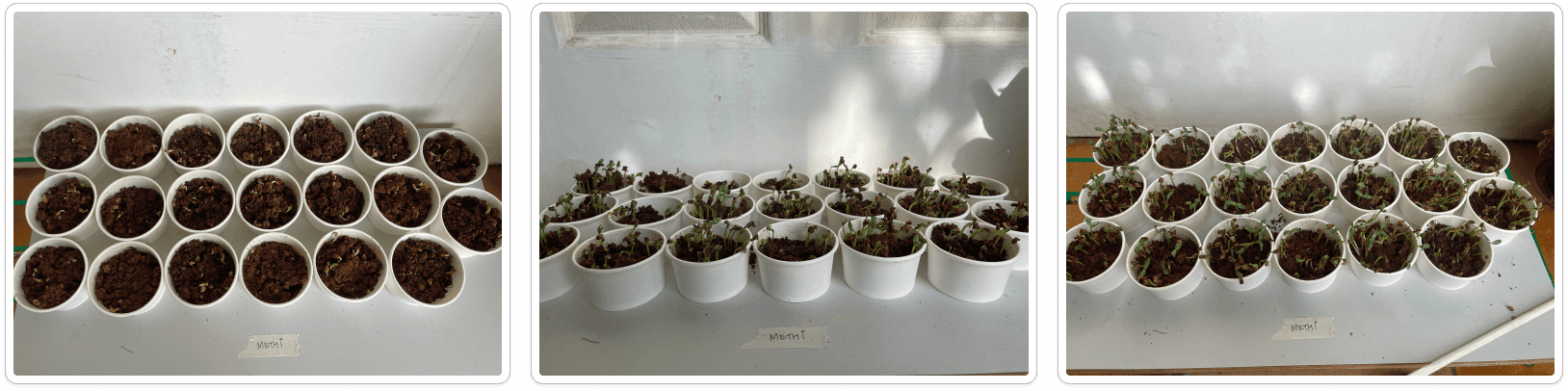
I picked methi (fenugreek), mustard and barley seeds. 5 days of misting in optimal sunlight followed. Of the three, methi was the fastest growing and most consistent. My plan was to grow a handful in every cup and then give each cup a haircut based on what my dataset would need.
To design the lids, I took a close up view of the map of every city. The lids were laser cut out of fibreboard. The idea was to capture any semblance of a plan and get the viewer to question if planned cities meant better access. Or what a plan would mean in the first place if access rates were great anyway. Each city’s texture would also become its own identifier.

✨ Showtime
The final display was set up on a window sill, to maintain the light the greens had grown in. The limited space meant I had to arrange the cities at random. Some other explorations had imagined displaying them in order of access or grouped according to common issues.
However, I did add annotations to some interesting cases. These added context and trivia to the display, spurring more questions and conversations.
The same display was put up at Science Gallery for their Sci560 exhibition, where we also had the chance to share our learnings on data physicalisation by taking a small workshop.
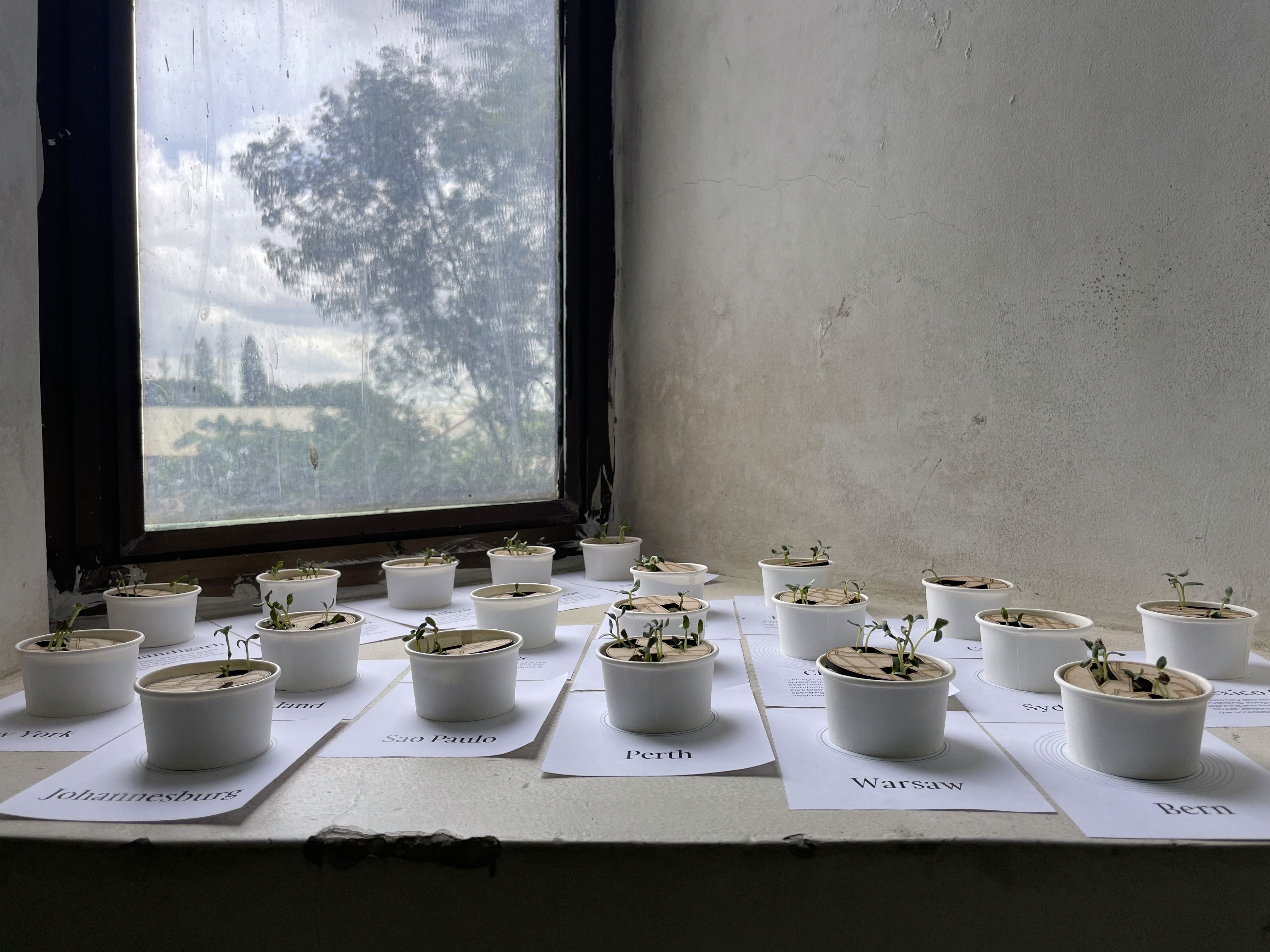
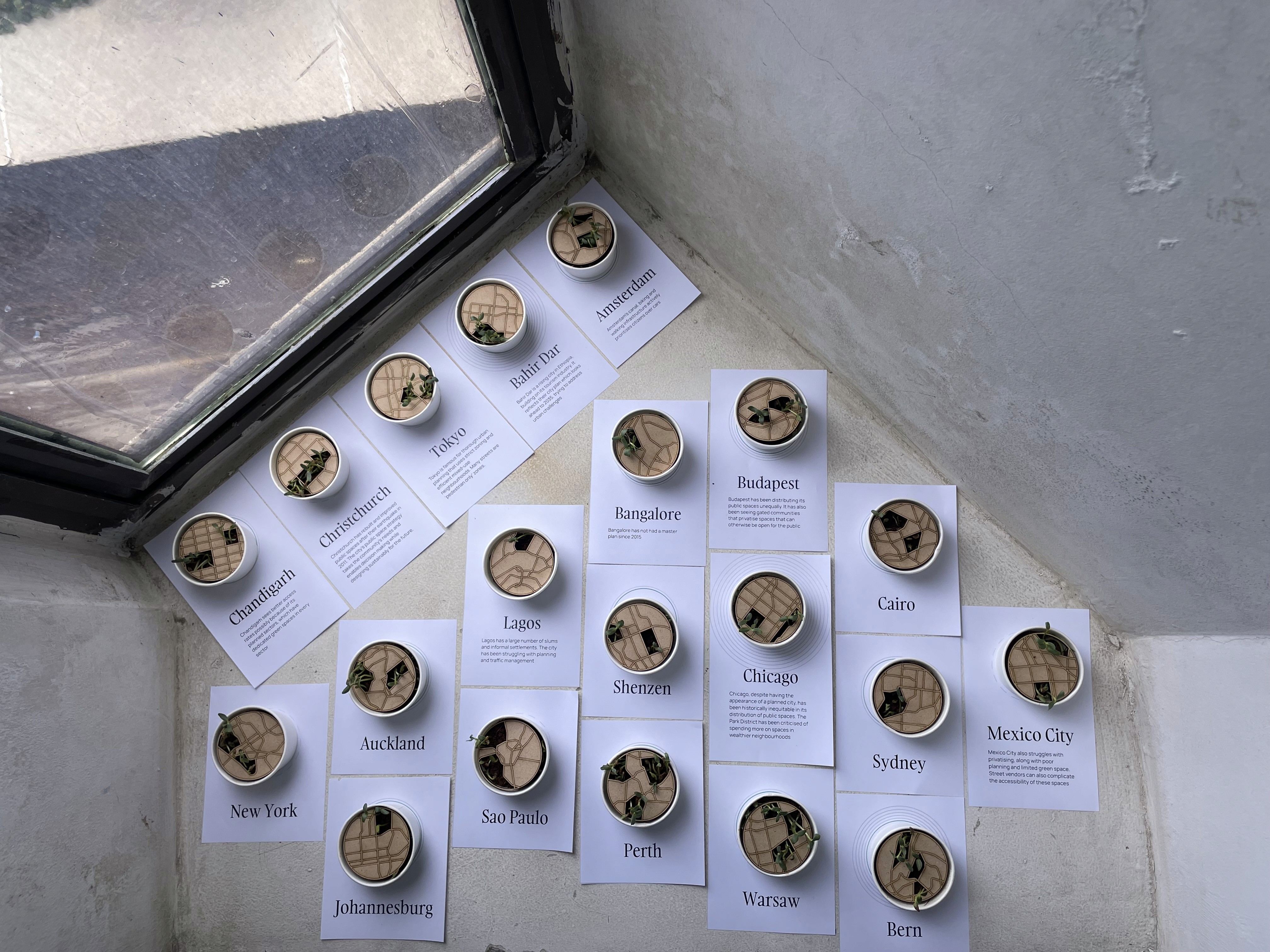
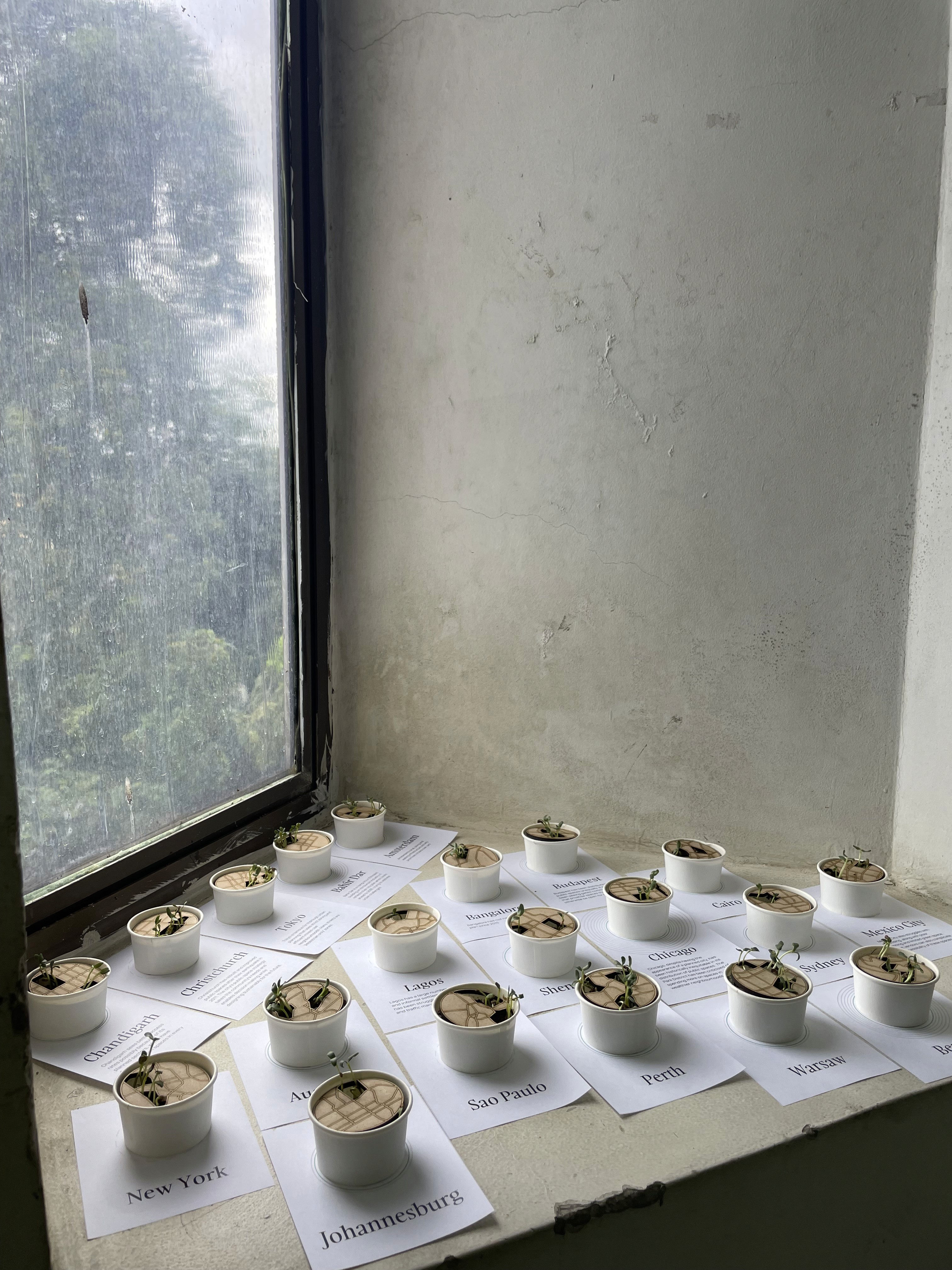
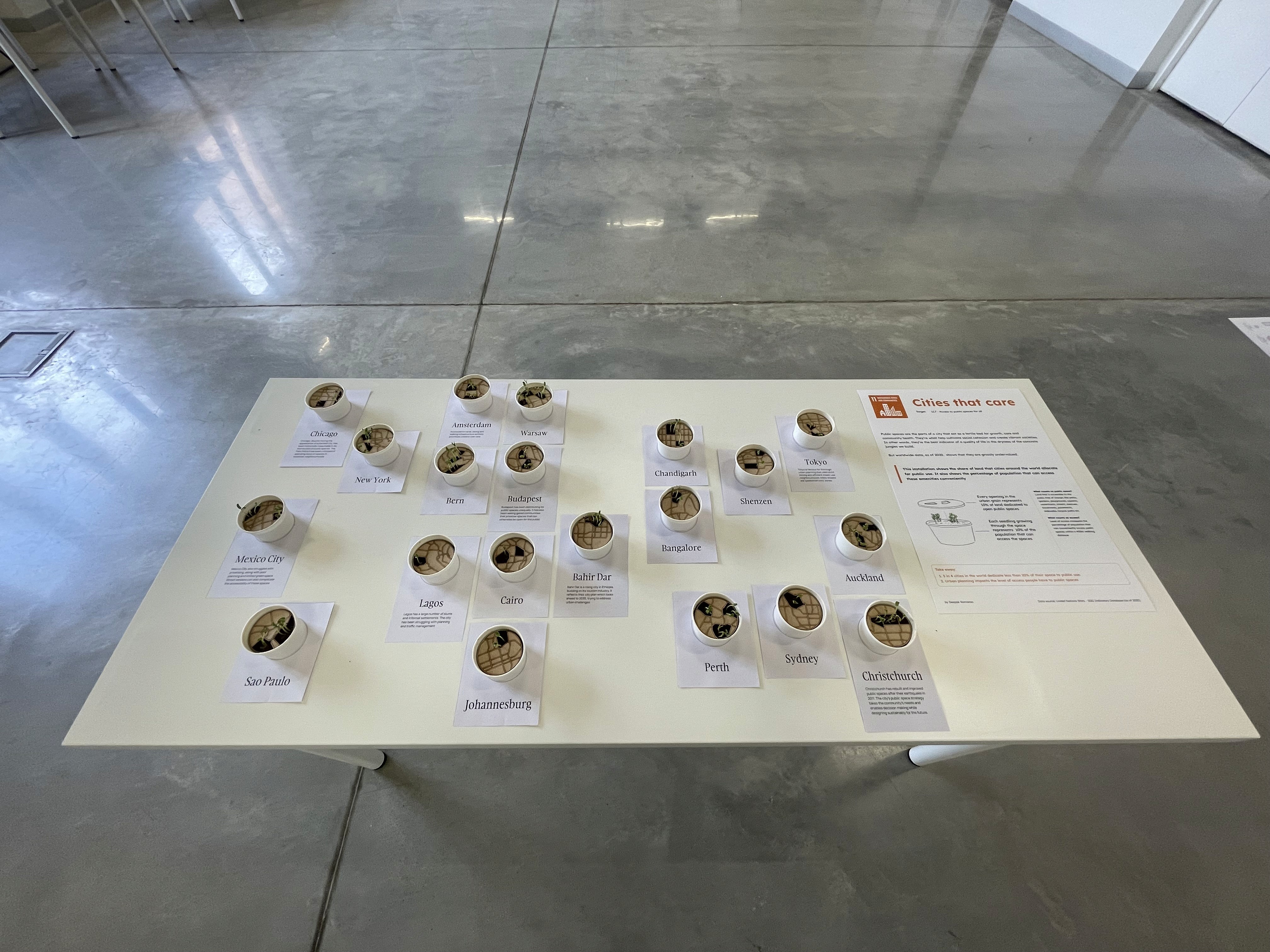
Here’s what I learned about this display, from the folks who visited :
It turns out that counting the stalks of newly sprouted seeds, especially when they’re densely packed together is a difficult ask. The marks of the data need to be discrete, especially when I’m asking viewers to distinguish one from the other.
The sprawl data, when read with the annotations are confusing. It throws viewers off. It made them wonder why cities could differ in their levels of access, and mainly, what sprawl had to do with it. Which is why it was omitted in the Science Gallery revision of it
Nonetheless, in this case, the density of the greens did the job and the metaphor left little to be explained.
🎬 Bonus content
The wait while the plants grew was an anxious one. I had little idea how they’d turn out, even on the day of the display. So I had to think of a Plan B.
So if you really think about it again, public spaces are also those common threads that run through all layers of the city. They’re the patches that bring people together, in turn strengthening the social fabric. 😮💨
While the plants grew outside, I made some more sketches for this backup.
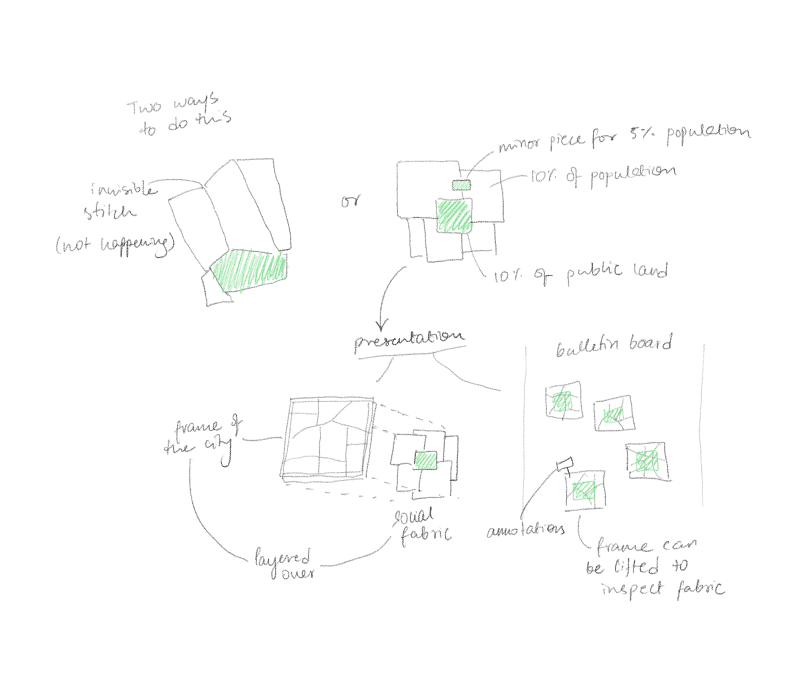
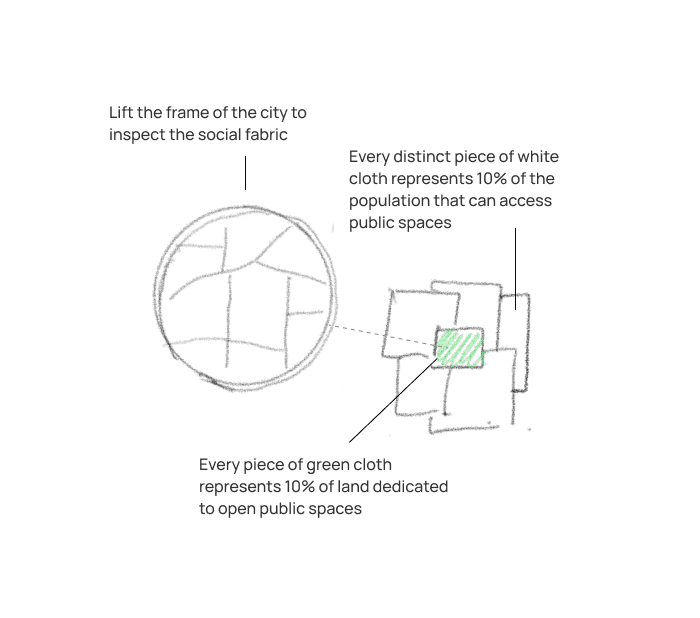
This one would be a patchwork of different pieces of fabric. Every distinct piece would represent 10% of the population. Every piece of green fabric would represent 10% of land dedicated to public use. A frame of the city, using the same road network as above, would be superimposed on top of the patchwork. This would make a city, and each of those would be pinned on a softboard.
The idea being that the more pieces of cloth that make the city, the stronger its social fabric would be ✨ I considered this an improvement over the micro-greens because the metaphor was slightly stronger, leaning into a well known sociological phrase. The reading of it would also would have been a tactile experience.
However, I never got around to producing this. Maybe next time. Onwards!
A huge thanks to Rasagy and Gurman for all the guidance on this module! 🙌